
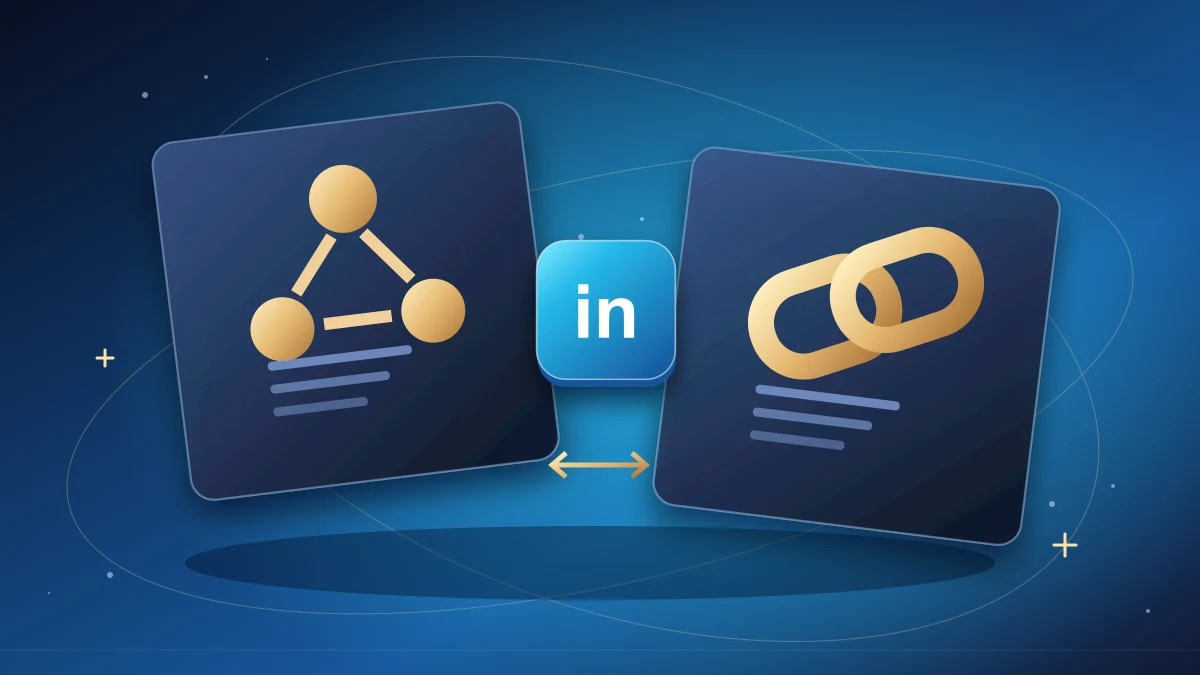
Following and connecting on LinkedIn describe different relationships. Following is primarily about receiving someone's public updates. A connection is a mutual professional link that requires acceptance. Neither guarantees that every post will appear in the other person's feed.
Following is a one-way content relationship
Someone can be interested in your public professional content without needing a direct relationship. Following lets that interest exist without a mutual connection request. It is useful when a reader wants to learn from a specialist, organization or public professional voice.
The exact visibility and interaction options depend on the account's settings and LinkedIn's current features. Do not assume that following grants access to private information or unrestricted messaging.
A connection is a mutual professional relationship
A connection request asks the other person to accept a link between your profiles. It is appropriate when there is a relevant professional reason: you worked together, met at an event or have a concrete context for contact.
Write a concise, honest introduction when it helps the recipient understand the request. Avoid implying that you met if you did not. Acceptance is not consent to repeated sales messages or an endorsement of your work.
Company Pages use a different model
A company Page builds a following rather than collecting personal-profile connections. People may follow for company news, useful expertise or product information. The Page's content should explain why those updates are worth receiving.
Do not compare a company Page's follower count directly with an individual's connection count as if they measure the same activity. The objects and relationships differ.
Why followers and connections can overlap
Connections and following can interact under LinkedIn's current settings, and people can change their preferences. Consequently, the totals should not simply be added together to claim a unique audience size. Check the definitions shown in the current interface before reporting.
A person may want to maintain a professional connection while changing what they see in their feed. That preference does not necessarily mean the underlying relationship has ended.
Choose the relationship that fits the purpose
If you publish educational content for a broad professional audience, following is a natural way for readers to stay informed. If you want to develop a specific working relationship, a relevant connection request may make sense.
For example, following an industry analyst can help you learn from their public work. Connecting with a colleague after a shared project has a different purpose. Neither should be used as a shortcut to claim credibility you have not earned.
Report outcomes with clear labels
Keep follower growth, connection growth and meaningful professional outcomes separate. Record the time period and account type. Useful outcomes might include relevant conversations or visits to a resource; a raw relationship count does not establish those results.
Review whether your profile explains your focus, whether your posts serve the intended audience and whether outreach is respectful. A healthy network is built through useful work and appropriate relationships, not by treating every available button as a growth tactic.
Choose the relationship intentionally
Following can express interest in someone's public professional content without establishing the same reciprocal relationship as a connection. A connection request should have a plausible professional context. Do not treat acceptance as permission for repeated sales messages.
Read the current profile controls and privacy settings because available options can vary. Avoid instructions based on an assumed universal button arrangement.
Keep organizational audiences distinct
A company Page's followers are not the same network as an employee's personal connections. The profile-versus-Page publishing guide explains why the voices and ownership should remain clear. Do not present employee relationships as a transferable company asset.
A practical decision check
- Do you mainly want to learn from the person's public content?
- Is there a genuine reason to establish a professional relationship?
- Can you explain that context honestly?
- Are you respecting the person's response and boundaries?
The commenting guide offers a way to participate usefully before making assumptions about a relationship. Neither follower totals nor connection counts prove trust, expertise or willingness to buy. Report each measure accurately and evaluate the quality of the actual interaction.
Explore LinkedIn services
Compare the available options on the LinkedIn services page. Review the service details before deciding whether an option fits your goals. Browse LinkedIn packages.